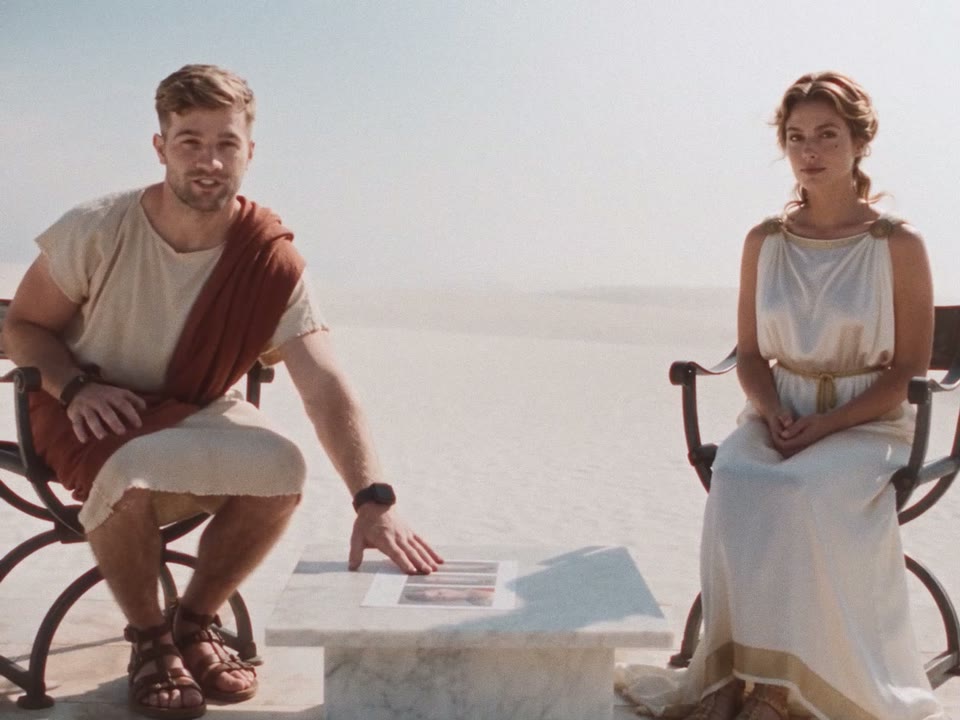
Slow push-in
A realisation, a decision, a confession.
Slow dolly-in at 2 km/h from a medium shot to a close-up over the whole shot, perfectly smooth, the focus stays on the near eye.
Free prompts · 02
“Cinematic camera movement” is not an instruction — the camera just drifts. A real operator decides the move, the speed and the reason. Each line below does that. Paste it into the CAMERA block and keep the field of view in OPTICS.
12 prompts · copy any of them with one tap · no email, no sign-up.
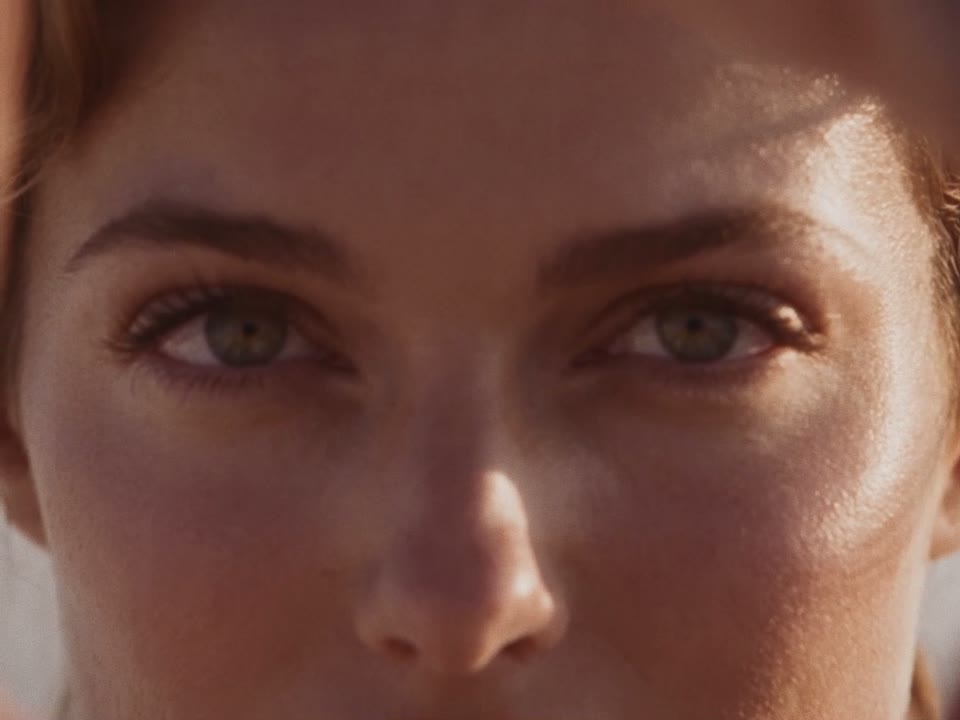 The crash zoom from our SHEET reel
12 Camera Moves
Moves toward or away from the subject.
A realisation, a decision, a confession.
Slow dolly-in at 2 km/h from a medium shot to a close-up over the whole shot, perfectly smooth, the focus stays on the near eye.
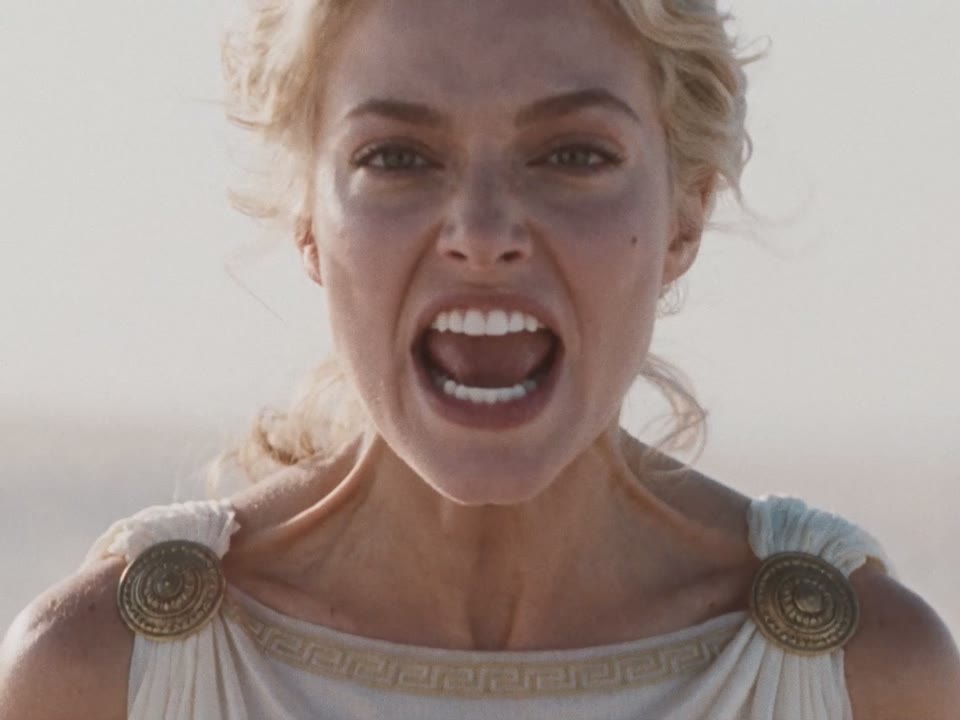
A punchline, a shock, a reveal of a detail.
Starts on a wide 63° field of view, then a rapid crash zoom to 18° in 0.5 seconds with motion blur, landing on the eyes; the camera then holds still.
Show how small the character is, or what surrounds them.
Starts in a close-up on the face, then a steady dolly-out at 4 km/h revealing the whole location around them; the character stays centred.
12 Camera Moves
The camera moves with the character.
Walking, running, riding — energy and direction.
Tracking shot alongside the character from the RIGHT side at their walking speed, 5 km/h, camera at shoulder height, the background slides past.
Entering a new place, following into the unknown.
Handheld follow from behind at two metres, the camera lags half a step behind the character, slight bob with each footstep.
A hero moment, a character taking in the scene.
Slow orbit around the character from camera-left to camera-right, a quarter circle over the whole shot at 3 km/h, the face stays sharp and centred.
12 Camera Moves
How the camera behaves, not where it goes.
Realism, tension, dialogue that feels unscripted.
Handheld documentary camera: slight natural shake, the operator’s breathing, small reframes toward whoever speaks, intimate distance.
Comedy timing, awkward silence, symmetry.
Locked-off static camera on a tripod at eye height, the frame does not move at all; only the people move inside it.
Conversations — puts the viewer inside the dialogue.
Over-the-shoulder shot from behind the LEFT character’s shoulder, their shoulder soft and out of focus in the foreground, the RIGHT character sharp.
12 Camera Moves
Use once per film, not once per shot.
An opening, an ending, the scale of a place.
Crane shot rising from ground level to six metres over the whole shot at 3 km/h, tilting down to keep the character in frame as the landscape opens up.
A fast cut between two people or two places.
0.0s–0.3s the camera is settled on subject A; 0.3s–0.8s a fast whip pan to the right with heavy motion blur; from 0.8s it settles on subject B.
The viewer becomes the character.
First-person POV at eye height, the character’s own hands visible at the bottom of the frame, natural head movement, slight walking bob.
Want to go further?
Moves decide how the camera travels. Lenses decide what the shot feels like: every focal length from 14 to 400 mm as a ready line.
More free prompts